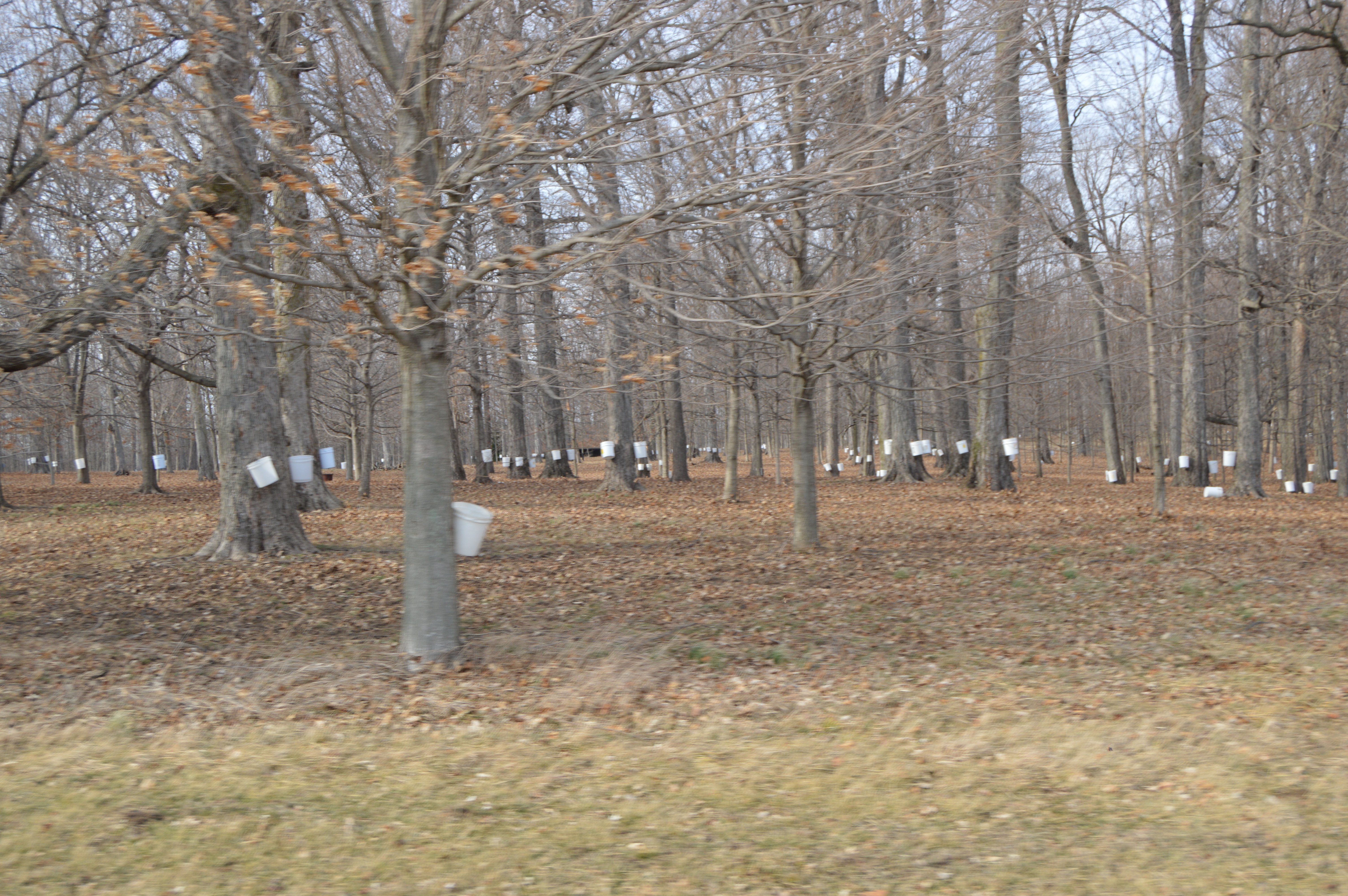
A sugar bush that has sat idle through a Canadian winter accumulates a specific set of maintenance requirements before it is ready to run. Freeze-thaw cycles stress plastic tubing, rodents damage lines, vacuum pump seals dry out, and evaporator pans corrode or develop deposits from the previous season's final runs. Pre-season inspection typically takes place in late January or February — well before sap flow is expected — so that any replacement parts or repairs can be arranged before the compressed timeline of the run itself.
The checklist below reflects general industry practice as described in provincial extension guides and IMSI technical bulletins. Specific procedures vary by system size, equipment manufacturer, and provincial food safety regulations.
Tubing and Collection System
Vacuum tubing systems — now standard on most commercial operations in Quebec and increasingly common in Ontario — are particularly sensitive to winter damage. The first task is a full walk of the mainlines and laterals while snow is still on the ground and before the freeze-thaw cycles of late February begin to obscure recent rodent damage.
Lateral Lines
- Inspect for holes, gnaw marks, and frost cracks. Rodents (primarily red squirrels and white-footed mice) target the lateral tubing near spout connections.
- Check connector fittings — "drops" between the lateral and the spout stub — for cracks or cross-threading from the previous season's spout pulls.
- Replace any lateral sections with visible splits. A single hole in a lateral tubing run will break vacuum across the entire section it serves.
Mainlines
- Walk the mainline run and inspect all saddle fittings, end caps, and unions for cracking. Mainline tubing is typically 5/8" or 3/4" and generally more resistant to freeze damage than laterals, but saddle points are vulnerable.
- Check that mainlines have not sagged over winter due to snow load or branch falls. Sags accumulate sap, reduce vacuum transfer efficiency, and become reservoirs for microbial growth.
- Clear any debris from collection tanks and verify that tank lids seal properly.
Spouts
The question of whether to replace spouts annually or re-use cleaned spouts has been a subject of ongoing research. Studies from the University of Vermont and Quebec's IRDA institute have documented biofilm formation on used spout surfaces that reduces sap yield and increases the risk of off-flavour development. Many commercial operations in Quebec now replace spouts each season as a matter of course.
Spout Inspection Checklist
• Check for cracks in the barb that seats in the tap hole• Inspect check valves (if used) for freedom of movement
• Confirm spout diameter matches the tap bit size
• Store new spouts sealed until installation day
Tap holes from the previous season should be inspected before drilling new holes. Current best practice calls for tapping a minimum of 10 cm away from any previous hole on the same tree, moving around the trunk to undamaged wood. The tap bit should be sharp; a dull bit tears wood fibres and creates a larger wound zone that reduces subsequent-year yield from nearby holes.
Vacuum Pump System
Vacuum systems have become central to commercial maple production because they increase sap yield substantially compared to gravity collection, particularly on flat terrain. Pre-season pump maintenance covers several components.
Oil-Lubricated Rotary Vane Pumps
- Change the pump oil before the season. Oil that has sat in a cold pump over winter may have absorbed moisture.
- Inspect vanes for wear and replace if thickness is below the manufacturer's specification.
- Check the oil sight glass and fill to the indicated level with the correct grade of food-safe pump oil.
- Verify that the intake filter is clean and that the exhaust line is clear and discharging away from the sugarhouse.
Vacuum Lines and Gauges
- Test the system for vacuum hold: a well-sealed system should hold vacuum with the pump off. Any rapid bleed-off indicates a leak in the lines, fittings, or tank connections.
- Calibrate vacuum gauges against a reference or replace if readings are erratic. Accurate vacuum monitoring at the releaser and at points distributed across the tubing system is essential for diagnosing system leaks during the run.
Evaporator
The evaporator is the most capital-intensive piece of equipment in a sugar operation, and pre-season inspection is critical to avoid failures during the run.
Flue Pan (Back Pan)
- Inspect the flue channels for scale deposits from the previous season. Calcium and magnesium carbonates precipitate from maple sap during boiling and form niter (also called sugar sand) deposits inside the flue channels. Heavy deposits reduce heat transfer and can cause localised overheating.
- Descale using a dilute food-grade acid wash (typically oxalic acid or a proprietary cleaner) following the manufacturer's concentration and contact time recommendations. Rinse thoroughly.
- Check the solder seams and rolled joints for cracks or corrosion. Stainless steel pans are less susceptible but not immune; traditional tin-coated pans require more frequent inspection.
Finishing Pan (Front Pan)
- Check float valves and syrup draw-off valves for proper seating and free movement.
- Inspect the thermometer or density meter installation for correct positioning and accuracy.
- Verify that the draw-off line and finishing tank connections are clean and free of previous-season residue.
Arch and Firebox
- Inspect firebrick and refractory cement for cracking. Repairs to the firebox should be completed well before the season so that new refractory material has time to cure properly.
- Clean the stack and hood of creosote accumulation if wood-fired. An oil or gas burner system should have the fuel delivery components and ignition system checked by a qualified technician.
- Ensure the draft control and damper operate freely.
Filtering and Finishing Equipment
Maple syrup leaving the evaporator contains niter particles that must be removed before bottling. Filtration is typically done hot, immediately after draw-off, while the syrup is still at or near finishing temperature.
- Inspect the filter press or plate-and-frame filter for damaged filter papers, cracked frames, and proper gasket seating.
- Stock sufficient diatomaceous earth (DE) filter aid for the expected production volume. DE acts as a pre-coat and body feed on the filter plates to capture fine niter particles.
- Confirm that the finishing tank is clean, has no previous-season residue, and that the thermometer and draw valve function correctly.
Food Safety Considerations
Provincial food safety regulations govern the sanitation requirements for maple equipment in Canada. Quebec producers operating under the Loi sur les produits alimentaires and federal producers under the Safe Food for Canadians Regulations are subject to inspection. Pre-season cleaning records and equipment maintenance logs may be reviewed by inspectors. Producers should retain documentation of cleaning agents used, their concentrations, and the dates of cleaning.